Source Educational Wooden Seafood Toys for Play, Learning, and Puzzles
Explore 30 options for educational wooden seafood toys designed for early childhood development. Compare models like WK2112 and WKF904, noting certifications such as ASTM and EN71, and varying age ranges from under 3 to 8 years. Evaluate specifications including size, material, and packaging to find suitable recreational and puzzle solutions.
Key considerations
Products List










Comprehensive Sourcing Guide
Educational Wooden Seafood Toys Sourcing Guide
Procurement of educational wooden seafood toys requires a clear definition of the target demographic, as observed listings indicate products designed for children ranging from under three years to eight years of age. Buyers must verify that the specific model selected aligns with the intended developmental stage, ensuring that small components are absent for younger age groups while complexity increases for older children. The observed market data highlights a distinct split between pure wooden toys and auxiliary types, necessitating a precise selection strategy to match the educational goals of the end user.
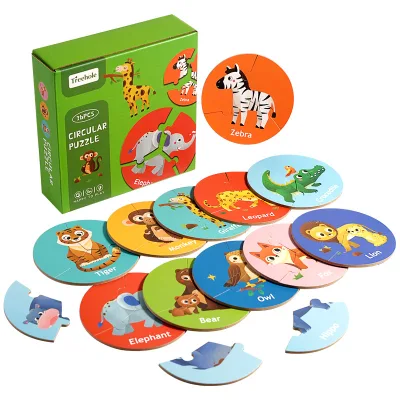
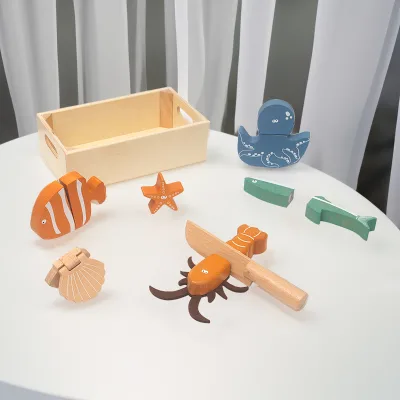
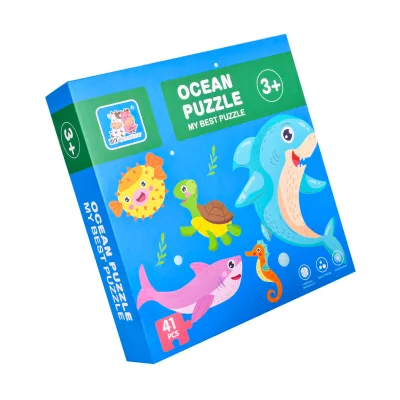
The functional scope of these items extends beyond simple recreation to include specific educational outcomes such as puzzle solving and cognitive development. Listings confirm that these toys often serve dual purposes as promotional items and educational tools, featuring themes like marine animals and forest creatures to engage young learners. Sourcing teams should prioritize products explicitly labeled with functions like "kids learning" to ensure the inventory supports structured play rather than unstructured recreation, thereby maximizing the value proposition for schools and retailers.
Product Scope and Observed Listing Signals
The product category encompasses a diverse range of intellectual and model toys, with specific observations noting styles that blend European and American design aesthetics. Buyers should expect to encounter variations in scale, ranging from small items suitable for individual handling to medium-sized sets that may require assembly or group interaction. The material composition is consistently identified as wood, with specific references to lotus wood and basswood for packaging, indicating a commitment to natural materials that appeal to eco-conscious procurement strategies.
Listing signals reveal significant variability in packaging standards, with options including outer cartons, color boxes, and shrink wraps depending on the specific model and supplier. This variation impacts logistics planning, as the single package size and gross weight differ substantially across the catalog, influencing shipping costs and storage requirements. Procurement teams must carefully review the specific model numbers, such as WK2112 or WKF904, to understand the exact dimensions and weight profiles before finalizing orders to avoid unexpected freight expenses.
Technical Specifications to Verify
Dimensional accuracy is a critical verification step, as observed standards list specific measurements like 18x13x8cm or 20x20x19.1cm for different product variants. Buyers must confirm that the physical size of the toy matches the intended use case, particularly for educational settings where storage space and handling ease are paramount. The presence of multiple standard sizes suggests that a single SKU may not suffice for a diverse product line, requiring a detailed specification sheet to ensure consistency across the ordered batch.
Weight and material density are equally important technical parameters, with observed data indicating single gross weights ranging from 0.35kg to 0.6kg for individual items. These figures directly affect the durability and safety of the toy, as heavier wooden components may offer better stability for younger children while lighter pieces might be easier for older kids to manipulate. Verification of the material of the box, specifically basswood, alongside the primary wood material, ensures that the entire product ecosystem meets the expected quality and safety thresholds for educational use.
Compliance and Safety Documentation
Safety compliance is non-negotiable for educational toys, with observed listings explicitly citing ASTM and EN standards as key certification markers. Buyers must demand current test reports confirming adherence to these specific standards, particularly ASTM F963-96a and EN71, which govern mechanical safety and chemical composition for children's products. The presence of these certifications on product pages serves as a baseline indicator, but procurement teams should request independent laboratory results to validate that the specific batch of seafood-themed toys meets all regulatory requirements for the target market.
Beyond physical safety, the documentation must address the environmental and material safety of the wood used in construction. While some background data mentions FSC certification, the primary observed facts focus on ASTM and EN compliance, requiring buyers to explicitly verify if sustainable sourcing claims are supported by valid documentation. Ensuring that the wood is treated with non-toxic finishes and that all components are free from hazardous substances is essential for maintaining brand reputation and avoiding regulatory penalties in international markets.
Cost Drivers and Commercial Terms
Pricing in this sector exhibits a wide range, with observed listings spanning from $0.70 to $246.15, driven by factors such as material quality, design complexity, and order volume. Buyers should analyze the cost structure relative to the specific model and customization level, as the availability of customized logos and packaging can significantly alter the unit price. Understanding the correlation between the observed MOQ of 30 sets and the higher price points is crucial for budgeting, as smaller orders may incur premium costs that impact the overall margin.
Commercial terms are heavily influenced by the supplier's supply ability, which is observed at 20,000 pieces per month, indicating a capacity for large-scale orders but requiring careful lead time management. The MOQ range of 1 to 5000 units offers flexibility, yet buyers must negotiate terms that balance inventory risk with cash flow constraints. It is advisable to clarify whether the quoted price includes all packaging materials, such as the observed outer cartons or color boxes, to prevent hidden costs from eroding the projected profitability of the educational toy line.
Supplier Qualification and Quality Control
Supplier qualification should focus on verifying the origin of goods, with observed data pointing to Jiangsu, China, as a primary production hub. Buyers must assess the supplier's track record in producing wooden toys, specifically looking for experience with the specific models like WKP212 or YJMFC-097 that match the educational seafood theme. Establishing a relationship with a supplier capable of consistent production is vital, as the variability in product standards and packaging suggests that quality control processes must be rigorous and standardized across all batches.
Quality control protocols must extend beyond the final product to include the inspection of raw materials and the manufacturing process. Given the observation of specific materials like lotus wood and basswood, suppliers should demonstrate their ability to source high-quality timber that is free from defects and suitable for children's toys. Implementing a pre-shipment inspection that checks for dimensional accuracy, finish quality, and the integrity of the packaging is essential to ensure that the delivered goods meet the strict expectations of educational institutions and parents.
Long-Term Procurement Checks
Sustaining a successful procurement relationship requires regular audits of the supplier's ability to maintain consistent quality and compliance over time. Buyers should establish a schedule for re-verifying certifications and testing results, as standards and regulations can evolve, potentially rendering previously compliant products non-compliant in the future. Continuous monitoring of the supply chain ensures that the educational wooden seafood toys remain safe and effective, protecting the buyer from liability and maintaining trust with end consumers.
Strategic planning for long-term procurement involves assessing the supplier's capacity to adapt to changing market demands and customization requests. The observed availability of customized logos and packaging indicates a flexible supply chain, but buyers must ensure that these capabilities remain robust as order volumes grow. Developing a partnership that includes shared goals for product innovation and quality improvement will help secure a reliable source of educational toys that can scale with the buyer's business needs while maintaining the high standards required for the children's market.
FAQs
What certifications do these wooden toys have?
These toys hold ASTM and EN certifications, ensuring they meet strict safety standards for children. The materials used include lotus wood and basswood, which are selected for their durability and eco-friendly properties. This compliance allows for safe recreational use and educational engagement for young children in various settings.
Can I customize the logo on these products?
Yes, customization is available for these wooden toys, including the option for a customized logo. Buyers can request specific branding to align with their marketing strategies. This service supports promotional activities and helps businesses establish a unique identity in the competitive toy market while maintaining high-quality manufacturing standards.
What is the minimum order quantity for these items?
The minimum order quantity varies, with some items requiring as few as 30 sets. Other products may have an MOQ of up to 5000 units depending on the specific model. This flexibility allows buyers to test the market with smaller orders or scale up production for larger distribution needs effectively.
What age group are these educational toys suitable for?
These toys are designed for children aged 3 years and older, with some models suitable for ages 2-3 years. They are ideal for early learning and recreational play. The intellectual and model toy types help develop cognitive skills while providing safe, engaging entertainment for young minds during their formative years.
How are these wooden toys packaged for shipping?
The toys are packaged in outer cartons, color boxes, or shrink wrap to ensure safe transit. Each package is designed to protect the wooden components from damage during handling. This robust packaging solution helps maintain product integrity and presentation, making them ready for retail display or direct distribution to end consumers.
What is the supply capacity for these products?
The supply ability is 20,000 pieces per month, ensuring consistent availability for bulk orders. This capacity supports both small-scale retailers and large distributors seeking reliable inventory. Buyers can plan their procurement strategies with confidence, knowing that the manufacturer can meet ongoing demand without significant delays or stockouts during peak seasons.